
Educational Programmes
Educational Mornings have been part of the Festival of Tolerance since 2009. They began with screenings and discussions with historians, alongside opportunities for pupils to meet Branko Lustig and other Holocaust survivors.
Our educational programmes now also address refugee integration, the rights of Roma communities and of disabled people, bullying and peer violence, children’s rights, and media and film literacy. We work in schools, cinemas, museums and online classrooms, bringing pupils into conversation with filmmakers, teachers, specialists and people with direct experience of the issues under discussion.
Instances of participation across all Festival of Tolerance educational programmes
Pupils who heard testimony from Branko Lustig and other Holocaust survivors
Festival of Tolerance data, November 2026. The first figure counts instances of participation. An individual pupil may have taken part more than once.
Explore our educational programmes
Select a topic to read about the programme and find related resources.
 The Holocaust and survivor testimonyBranko Lustig and other Holocaust survivorsFIND OUT MORE
The Educational Mornings began in 2009. After the screenings, pupils met people who had survived Nazi and Ustaša persecution as children or young people. The programme began with Branko Lustig, who won Academy Awards for Schindler’s List and Gladiator, survived Auschwitz and Bergen-Belsen, and served for many years as president of the Festival of Tolerance.
Lustig spoke to pupils about life before deportation, separation from his family, the camps and his return after the war. The screening gave way to questions that no prepared lecture could have anticipated. His testimony allowed pupils to encounter that history through the voice of someone who had lived it.
Holocaust survivors who gave testimony in the educational programme and at related festival events include Vesna Domany Hardy, Oleg Mandić, Dan Dragutin Bar-Sela, Erika Fürst, Aleksandar Ajzinberg, Darko Fischer and Simon Gronowski. They are among the many witnesses who contributed over the years.
These encounters took place in Croatia and abroad. Branko Lustig and Erika Fürst took part in educational programmes in Ljubljana, and Aleksandar Ajzinberg gave testimony in Belgrade. Dan Dragutin Bar-Sela was a guest at the Educational Mornings in Zagreb. Simon Gronowski spoke at the Festival in Zadar in 2025, alongside a screening of Life Is Impossible Without Music.
Vesna Domany Hardy gave testimony on several occasions in Zagreb and Zadar. On 8 February 2023, the Ministry of Science and Education in Zagreb hosted an Educational Morning, A Hidden Childhood – Vesna’s Story, at which she spoke to secondary-school pupils from Zagreb County. In Zadar, she took part in the programme accompanying One Life.
Alongside first-hand testimony, we use documentaries, fiction films, photographs and archival sources, and organise conversations with historians and specialists from memorial institutions. Topics include Jewish history and culture, Nazi and Ustaša persecution, antisemitism, efforts to rescue people facing persecution, and contemporary Holocaust denial and distortion.
Working with institutions including the Mémorial de la Shoah in Paris, the programme also draws on research into resistance and the Righteous Among the Nations. Pupils encounter, among others, the stories of Helene Goldmark and Father Pierre-Marie Benoît.
More than 70,000 pupils have heard testimony from Branko Lustig and other Holocaust survivors through the Festival’s educational work.
Vesna Domany Hardy’s testimony – Ministry of Science and Education
 Dijalogija and Google ClassroomFilms, discussions and digital teaching resourcesFIND OUT MORE
Dijalogija – Let’s Talk About It builds on the Educational Mornings and the Film and Discussion programme. It brings together screenings, conversations with guests, first-hand accounts and resources that teachers can use before or after a session.
Depending on the subject, pupils speak with Holocaust survivors, refugees, representatives of minority communities, psychologists, legal specialists, journalists and filmmakers. They watch a film or selected extracts before the discussion, and teachers can revisit the subject in class afterwards.
The digital strand of Dijalogija has been developing since 2020. Some sessions take place live online. Other modules use recordings of earlier discussions, films and supporting resources. Programme records distinguish between live online testimony, recorded testimony and online lectures by historians.
One online Educational Morning, held on 25 November 2020, examined the Wannsee Conference with the historian Matthias Hass. Recorded materials on the Holocaust include The Teddy Bear, Još sam ovdje, Skriveno djetinjstvo – Vesnina priča, Jasenovački memento, Lea i Darija and a recording of the opera Brundibár.
Selected modules use Google Classroom, where teachers can access films, recordings of sessions and supporting material. Some classrooms require a Google account and permission to join.
Dijalogija – programme overview
 Refugee integrationArtematizacija, UNHCR and Hope Away from HomeFIND OUT MORE
Since 2018, the Festival of Tolerance has worked with UNHCR Croatia on educational and artistic programmes about forced displacement, international protection and the experiences of people who have had to make their home in another country.
In Artematizacija – The Art of Understanding, pupils watch films and speak with people who have experienced displacement, representatives of UNHCR and the Jesuit Refugee Service, and human rights specialists. The discussions address why people leave, as well as education, learning a language, friendships, prejudice and beginning a new life in Croatia. Some guests arrived in Croatia as young people without their parents.
The films used in these sessions include Moji snovi, moja prava, The Red Suitcase, Otok nade and Sirena. The films prepare pupils for conversations grounded in the direct experience of people who have lived through displacement.
Hope Away from Home invites schools to make short films about refugee inclusion. One edition involved 100 pupils from ten primary schools. Bacači sjenki led introductory filmmaking workshops, and Alen Galović delivered a session on media literacy.
Award-winning films included Domovina u srcu (Marija Jurić Zagorka Primary School, Zagreb), Nepodnošljiva lakoća nestajanja (Klinča Sela Primary School) and Svijetlo nade i u mraku (Ivo Andrić Primary School, Zagreb). Duga koja spaja (Pećine Primary School, Rijeka) received a special commendation.
Pupils develop a story, select interviewees, shoot and edit their films. Alongside the technical work, they consider their responsibilities towards the people they portray, particularly when a film depicts the loss of a home or forced displacement.
 Inclusion and diversityDisabled people and Roma communitiesFIND OUT MORE
Dijalogija examines access to education and culture and the everyday experiences of disabled people. Films and discussions consider the consequences of inaccessible communication, assumptions about what someone can do, and barriers to participation in school and public life.
The Silent Child provides a starting point for discussing deafness, sign language, family relationships and children’s rights. Specialists and representatives of disabled people’s organisations also contribute to the programme.
Sessions on Roma communities cover Roma history and culture, children’s and young people’s experiences of education, discrimination, and growing up where prejudice is commonplace. Members of Roma communities and organisations working to advance their rights take part in the discussions.
Pupils have the opportunity to speak directly with people whose experiences they are studying. They compare a film’s perspective with first-hand accounts and evidence they can verify.
 Bullying and peer violenceThese Are the Rules and discussions with specialistsFIND OUT MORE
Dijalogija – Let’s Talk About Bullying covers physical, verbal, psychological and online abuse, social exclusion and humiliation. It also examines the responsibilities of bystanders and adults.
Ognjen Sviličić’s These Are the Rules provides one starting point. Pupils consider the violence depicted in the film, the responses of parents, schools and institutions, and the consequences when help comes late or fails to materialise.
Psychologists, child protection specialists and institutional representatives contribute to the sessions. Online sessions bring together school groups from several towns, and some take place in schools. In Zagreb, we also run the programme for first- and second-year pupils at the Faust Vrančić Technical School of Mechanical Engineering.
Discussions focus on what pupils can do: whom they can turn to, how they can support a peer experiencing bullying or violence, and why staying silent or sharing footage of abuse can make matters worse.
 Media literacyAlen Galović, Razotkrivanje, disinformation and AIFIND OUT MORE
We teach media literacy using examples from journalism and digital media. The journalist Alen Galović works with pupils to verify sources, compare headlines with the articles they introduce, recognise manipulated images and understand how false information circulates on social media.
In November 2024, he delivered lectures and workshops for older pupils from 15 primary schools. Media literacy also informs the Hope Away from Home filmmaking workshops, in which pupils make their own decisions about how to portray real people and events.
Developed with UNHCR Croatia, Razotkrivanje is an interactive guide to false news and artificial intelligence, available on the Festival website. It includes an educational booklet, three quizzes and two practical exercises with video examples. Alen Galović devised the exercises.
The guide covers source credibility, disinformation, the role of algorithms and AI-generated content. It is intended for teachers, school support specialists and pupils, and can be used in subject lessons, tutor time and project work.
At the 20th Festival of Tolerance in Zadar, Mr. Nobody Against Putin provided the starting point for a discussion entitled The Algorithm Doesn’t Hate. It Just Knows What Gets Through. Drawing on examples of propaganda from the film, pupils examine their own online practices and consider what they need to verify before accepting or sharing a claim.
Open Razotkrivanje – booklet, quizzes and exercises
Educational Mornings – programme of the 20th Festival of Tolerance
 Film literacyDigital Film School and films by pupilsFIND OUT MORE
We develop film literacy through both viewing and filmmaking. Pupils learn about framing, editing, sound and preparation for filming, and consider how a film interprets the events it records.
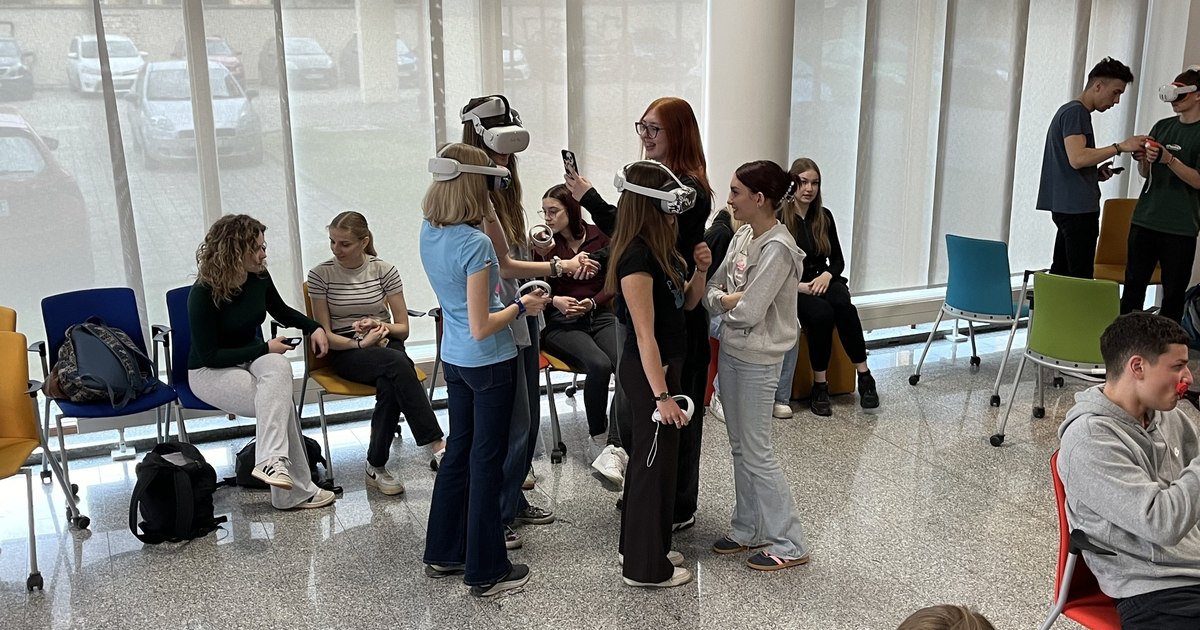
Launched in 2019, the Digital Film School included virtual reality screenings, a digital wall, quizzes and interactive activities. Films on displacement included Clouds Over Sidra, Sea Prayer and Life in the Time of Refuge (Život u vrijeme izbjeglištva).
In workshops, pupils develop an idea, prepare a short script and shooting plan, film with a camera or mobile phone, and then select and edit their footage. This work forms part of our collaborations with Bacači sjenki, Restart and other film professionals.
Hope Away from Home connects this work with the experiences of refugees. Pupils make films in their schools and decide how to approach the subject, considering how the script, editing, sound and treatment of the people on screen shape the story.
Filmmaking is itself a form of media literacy. Through shooting and editing, pupils see how framing, the order of scenes and decisions about what to leave out can alter what an audience understands.
 BrundibárChildren’s opera, Terezín and Holocaust educationFIND OUT MORE
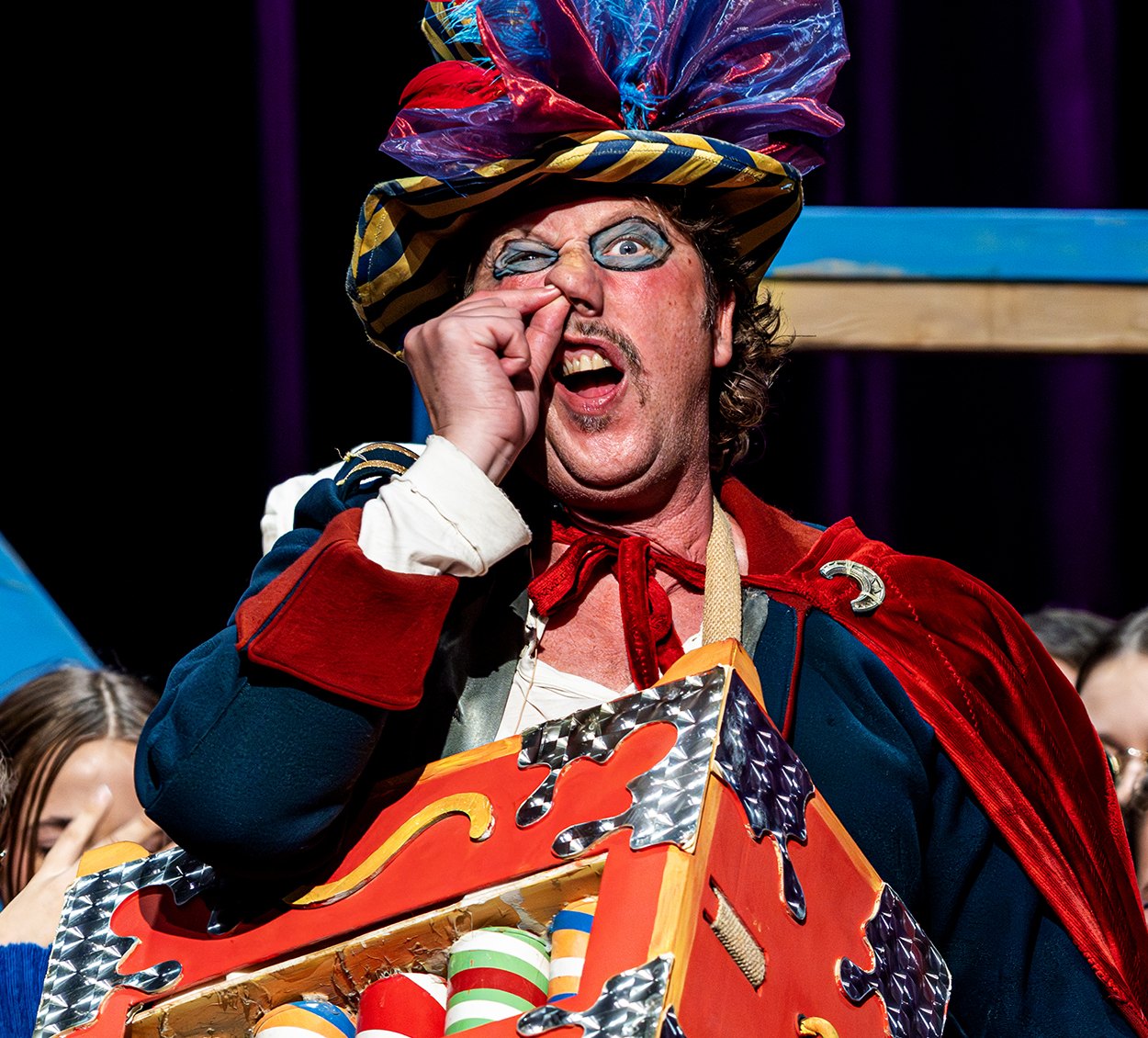
Composed by Hans Krása to a libretto by Adolf Hoffmeister, the children’s opera Brundibár was performed during the Second World War by Jewish children imprisoned in the Terezín ghetto. Many of those children were subsequently deported to Auschwitz and murdered.
The Croatian production was first performed in 2018. Its development is associated with Branko Lustig and the work of the Centre for the Promotion of Tolerance and Holocaust Remembrance and the Festival of Tolerance. Krešimir Dolenčić has contributed as director. Performances have taken place in theatres, concert halls and memorial sites, including the Jasenovac Memorial Site.
Performances are accompanied by historical introductions, discussions and testimony. On 26 November 2024, the Holocaust survivor Darko Fischer shared his experiences alongside two performances at the Franjo Krežma Concert Hall in Osijek.
Pupils study the story and music of the opera and the circumstances in which it was performed at Terezín. The programme distinguishes the original wartime performances, the Nazi exploitation of cultural life in the ghetto for propaganda, and contemporary productions commemorating the children who performed the work.
Teaching resources include a recording of the Croatian production, Dijalogija materials and documentary extracts, including Brundibár – Making Of from 2018.
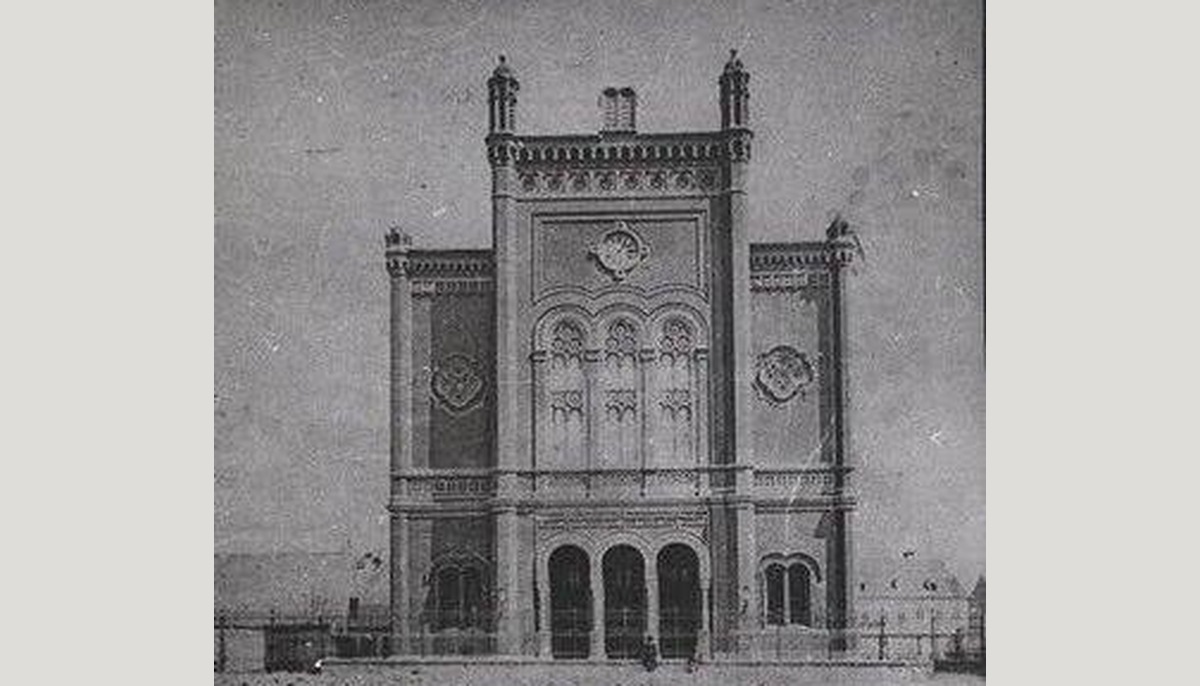 What Remains?Digital exhibition and a history lessonFIND OUT MORE
Što ostaje? (What Remains?), a digital exhibition from the Frame of Respect – Digital Traces of Zagreb project, examines three sites in Zagreb’s Jewish history: the synagogue in Praška Street, the music pavilion at Zrinjevac and the First Croatian Oil Factory.
The exhibition is accompanied by a lesson plan and worksheet for Year 8 history in Croatian primary schools. The 45-minute lesson is aligned with the history curriculum. Teachers can work with photographs and printed sources where video playback or reliable internet access is unavailable.
The lesson begins with Ivan Standl’s 1867 photograph of the Zagreb synagogue. Pupils record their observations and use a written source to investigate its demolition on the orders of the Ustaša authorities between October 1941 and May 1942. Zrinjevac introduces them to Eduard Prister’s contribution, while the oil factory provides a route into Zagreb’s industrial history and that of the Aleksander family.
Pupils work in three groups. Each draws a conclusion, cites a supporting source and explains the limits of that evidence. The timeline links Zagreb’s unification in 1850, the synagogue’s consecration in 1867, the gift of the pavilion in 1891, the founding of the factory in 1916, the synagogue’s demolition in 1941–42 and the Zagreb production of Brundibár in 2018.
The lesson concludes with an extract from Brundibár – Making Of (2018). Pupils explain what the footage reveals about a contemporary production and why its evidential value differs when studying the lives of children at Terezín during the war. They complete the worksheet with a brief reflection and a question for further research.
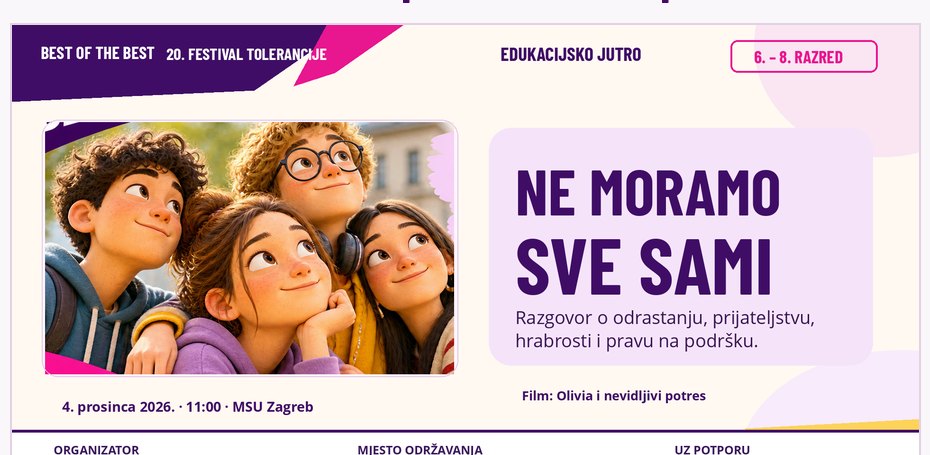 We Don’t Have to Do Everything AloneOlivia and the Invisible Earthquake, Museum of Contemporary Art ZagrebFIND OUT MORE
We Don’t Have to Do Everything Alone is an Educational Morning on children’s rights, poverty, housing insecurity and support for families. Held at the Museum of Contemporary Art in Zagreb, it is designed for pupils in Years 6–8 of Croatian primary schools.
The session begins with Irene Iborra Rizo’s animated film Olivia and the Invisible Earthquake. Twelve-year-old Olivia, her mother and her younger brother lose their home. As the family faces changes beyond its control, Olivia tries to protect her brother from what is happening.
Melita Horvatek Forjan leads the discussion. Pupils explore poverty through particular moments in the film: what Olivia keeps from her friends, why a child might feel responsible for a parent’s difficulties and who can offer help.
Pupils are under no obligation to speak about their own family circumstances. The discussion focuses on the characters’ choices, children’s rights and the responsibilities of adults, schools and communities.
We Don’t Have to Do Everything Alone – Educational Morning at the Museum of Contemporary Art
Film archive
Odabrani filmovi uz svjedočanstva i Edukacijska jutra
The films shown have varied with the age of the pupils, the venue and the subject. This selection identifies confirmed pairings of film and testimony. Other titles are listed as part of the wider repertoire.
- The Last Flight of Petr Ginz – School at the Cinema, Zagreb, 2015–16. Branko Lustig gave testimony at some of the screenings.
- Belle and Sebastian – Educational Morning with Branko Lustig, Podgorica, 2016. The film also featured in the earlier Educational Mornings repertoire.
- Secrets of War – Educational Morning with testimony from Branko Lustig, Čakovec, 2016.
- A Bag of Marbles – Kino Europa, Zagreb, April 2018. Testimony by Branko Lustig and Dan Dragutin Bar-Sela.
- No Asylum: The Untold Chapter of Anne Frank’s Story – Kinoteka, Zagreb, May 2018. Testimony by Dan Dragutin Bar-Sela.
- 5105, Priča o bijegu iz Mauthausena – Zagreb, April 2019. Testimony by Vesna Domany Hardy.
- A Hidden Childhood – Vesna’s Story – Ministry of Science and Education, Zagreb, February 2023. Discussion with and testimony by Vesna Domany Hardy.
- One Life – Educational Morning, Zadar, 2024. Testimony by Vesna Domany Hardy.
- Life Is Impossible Without Music – Zadar, 2025. Simon Gronowski gave testimony and took part in a discussion at this related festival event.
- Brundibár – opera performances with Holocaust education, including testimony by Darko Fischer in Osijek in 2024.
The earlier Educational Mornings repertoire also included The Boy in the Striped Pyjamas, Moramo pamtiti, Inside Hana’s Suitcase, Nadarena djeca and Run Boy Run. These titles belong to the film programme. Pairings with individual witnesses are recorded where documented.
Film archive and testimony
Selected films, encounters with Holocaust survivors and documentary records from the Festival’s educational work.
Browse the film archiveDigital learning resources
Films and recordings from Dijalogija, with materials for remote learning.
Open DijalogijaResources for teachers
The interactive guide Razotkrivanje and What Remains?, a digital exhibition with a history lesson plan.
Razotkrivanje · Što ostaje?Information for schools and teachers
Sessions take place throughout the school year. Participation is generally free for schools, with advance registration where required. For information about programmes and access to teaching resources, email obrazovanje@festivaloftolerance.com.